PGNTA: 17-DOF Humanoid Robot
A 53 cm bipedal humanoid I designed and built from scratch. An ESP32 drives 17 servos (14 MG995, 3 SG90) through a PCA9685 on a 3 mm plywood frame, with an MPU6050 IMU and an HC-SR04 ultrasonic sensor, a six-cell 18650 pack and live data on Arduino Cloud. It waves, dances and turns its head toward objects.
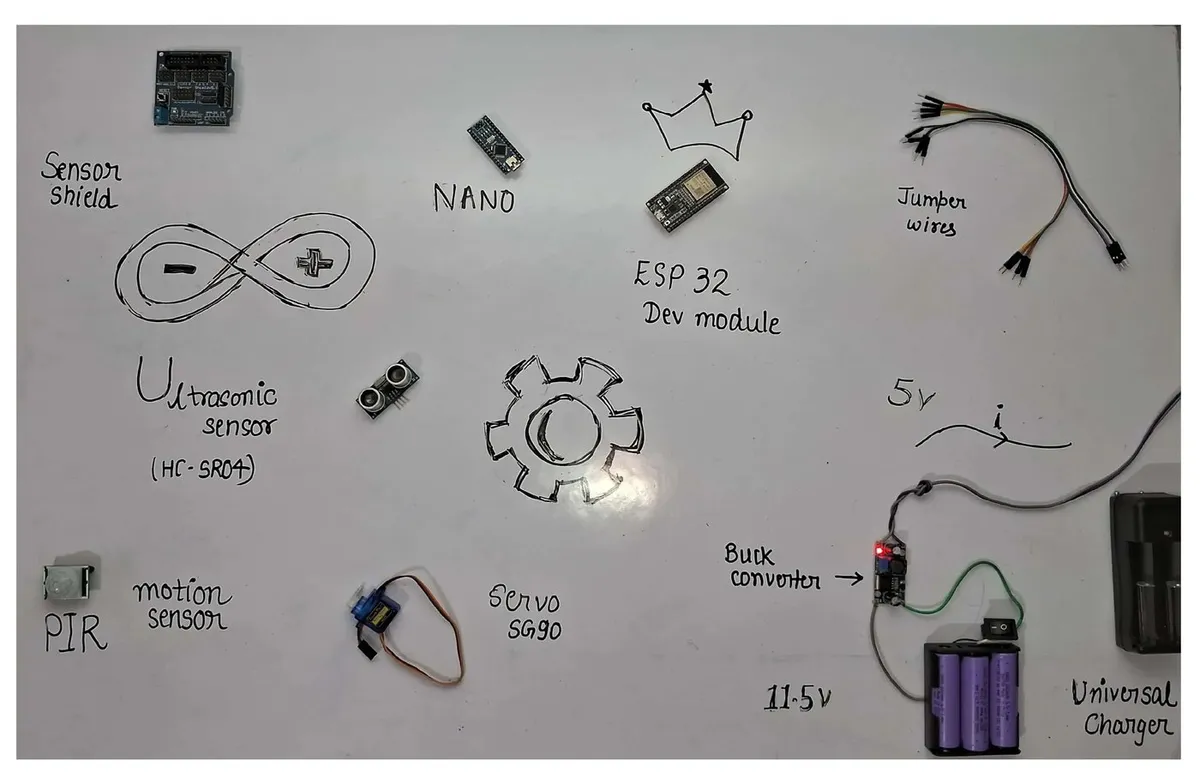
Balanced torque, cost and availability: 14 high-torque MG995 servos for the major joints, 3 SG90 servos for light joints, an ESP32 as the main controller, a PCA9685 16-channel servo driver, an MPU6050 for acceleration and gyro data, and an HC-SR04 for object detection.
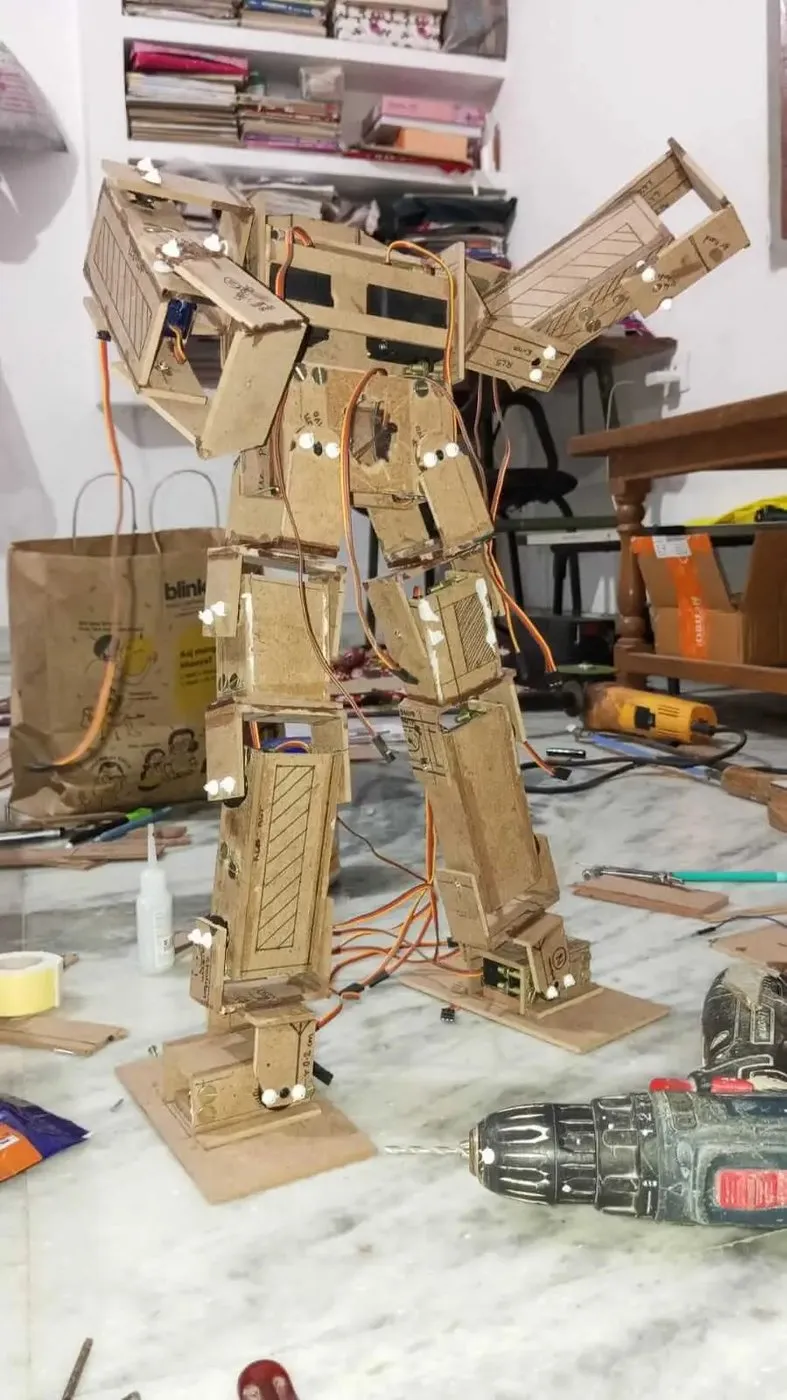
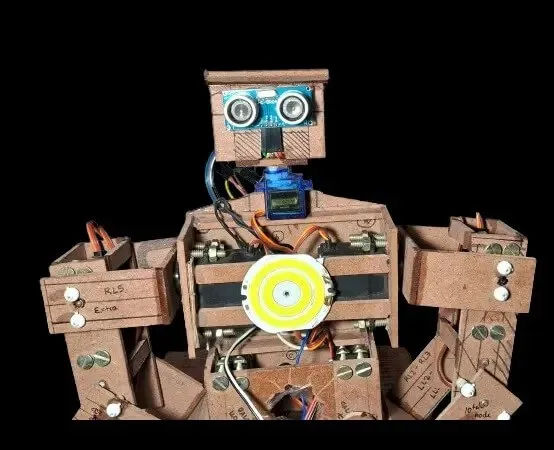
The frame is 3 mm plywood: a 14×11 cm body, box-shaped limbs, C-shaped hinge joints and a 6×3×5 cm head for the sensors. Each servo is held by four 2 mm screws, with 7 mm holes for the servo horns and nails as support on the opposite side. Final size: 53 cm tall, 25 cm long, 8 cm wide.
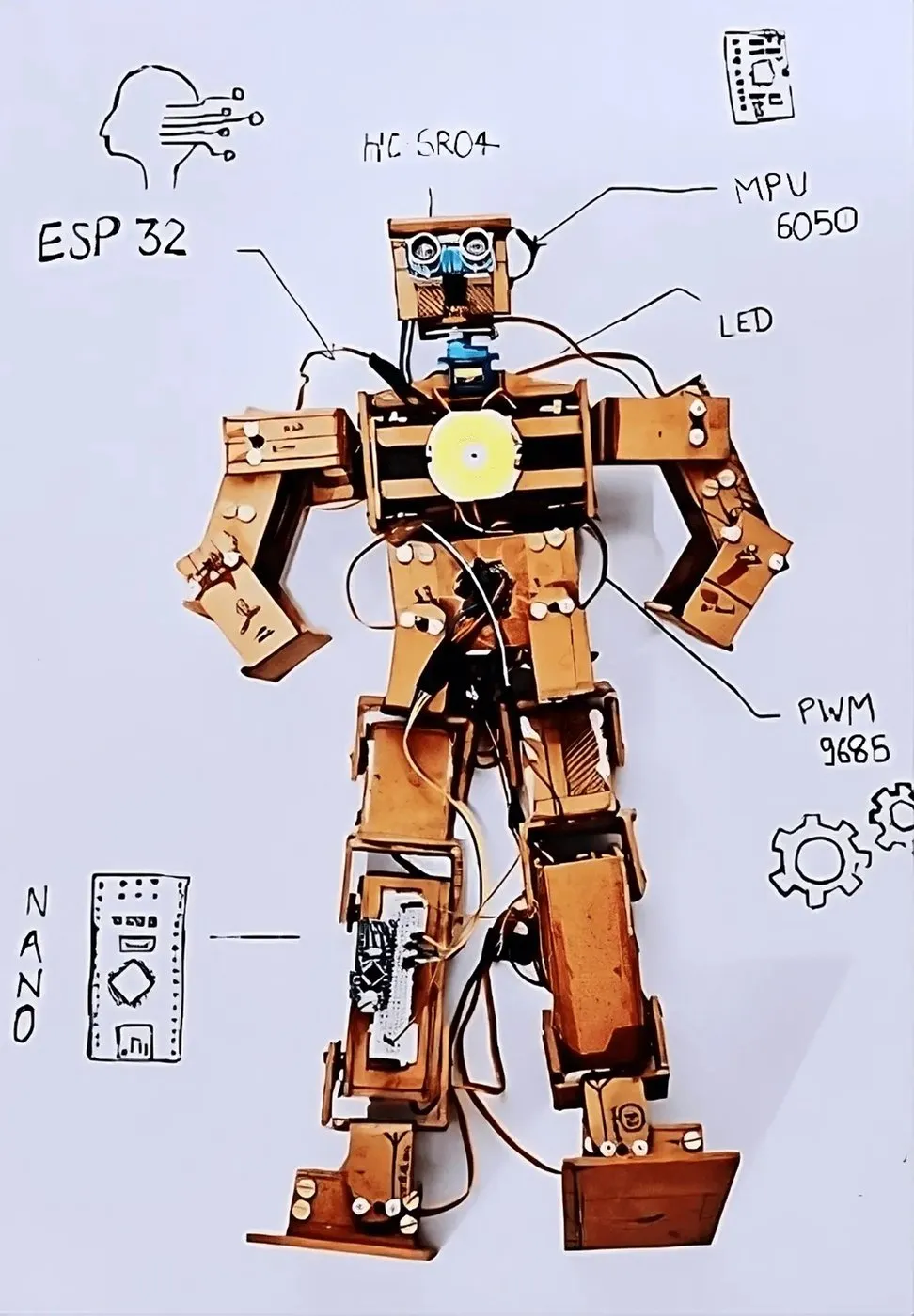
The servos copy human joints: 10 in the legs (LL1–LL5, RL1–RL5), 6 in the arms (LH1–LH3, RH1–RH3) and 1 to turn the head.
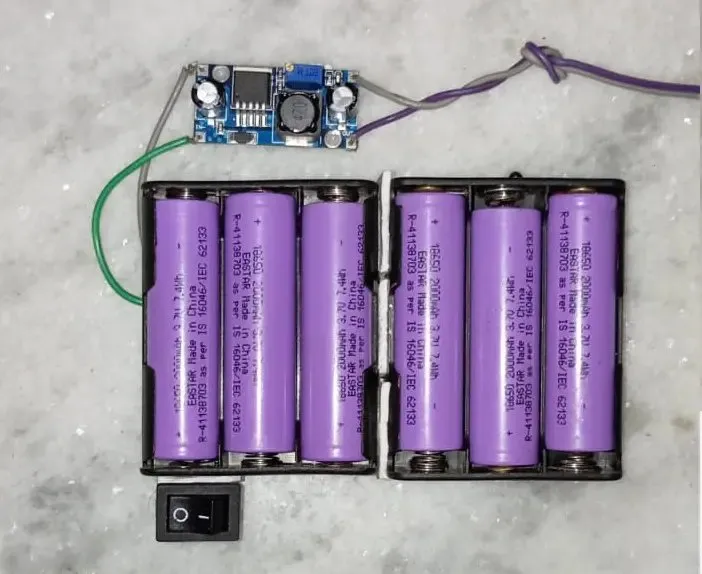
9 V batteries could not supply the current for 17 servos. The final pack uses six 18650 cells (3.7 V, 2000 mAh): two parallel strings of three cells in series, about 11.5 V. A DC-DC buck converter steps it down to 5 V for the servos and electronics.
The ESP32 sends PWM commands to the PCA9685 over I2C. A 25 V 100 µF capacitor smooths the servo supply. The HC-SR04, MPU6050 and a circular LED connect to the ESP32. An Arduino Nano version of the circuit is used to interface with servo control software.
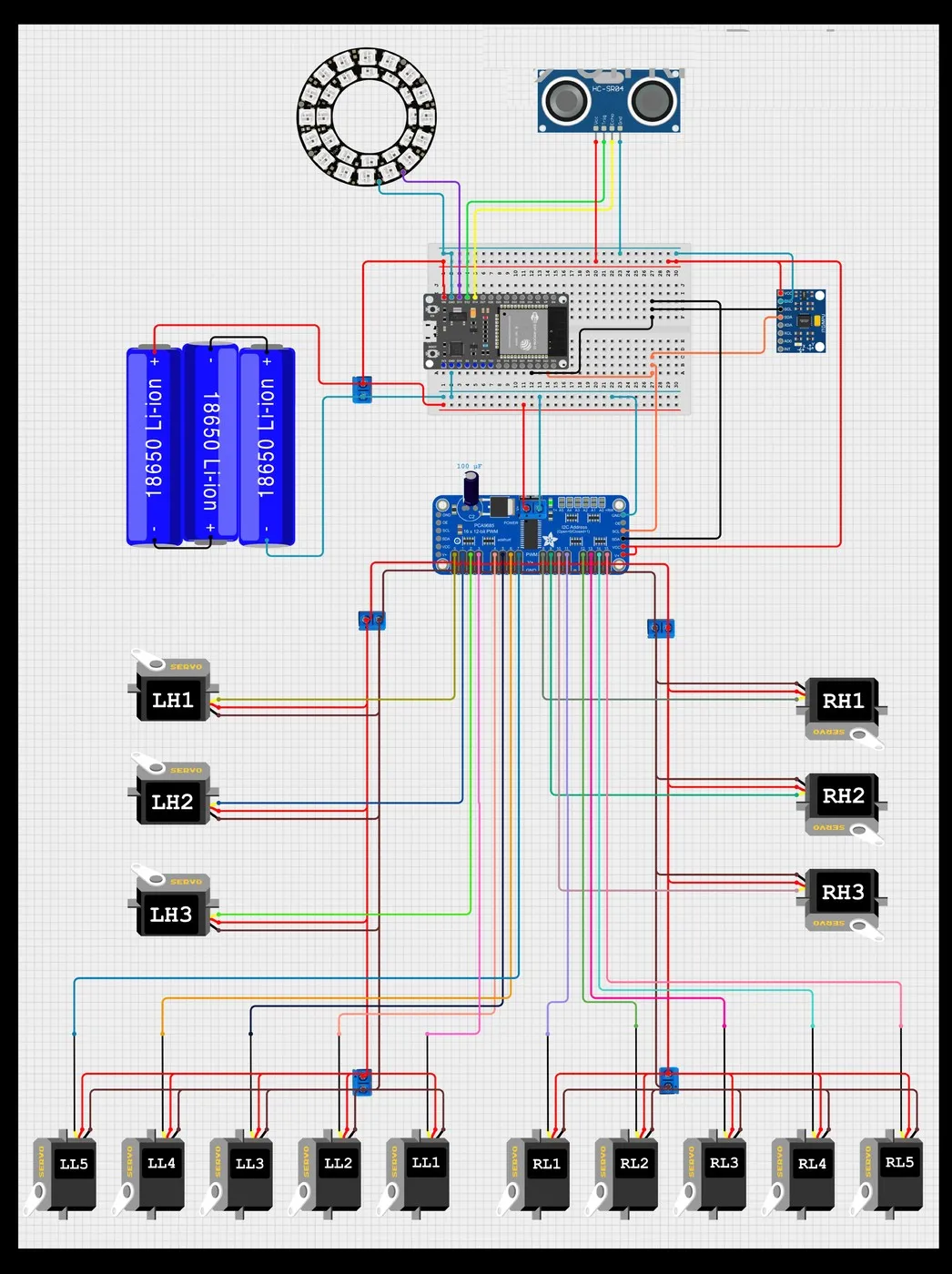
Programmed in the Arduino IDE with PWM servo control. I tuned each servo position with Tim's Servo x16 Controller and saved preset poses and movement scripts. Arduino Cloud shows live data: head angle, distance and acceleration.
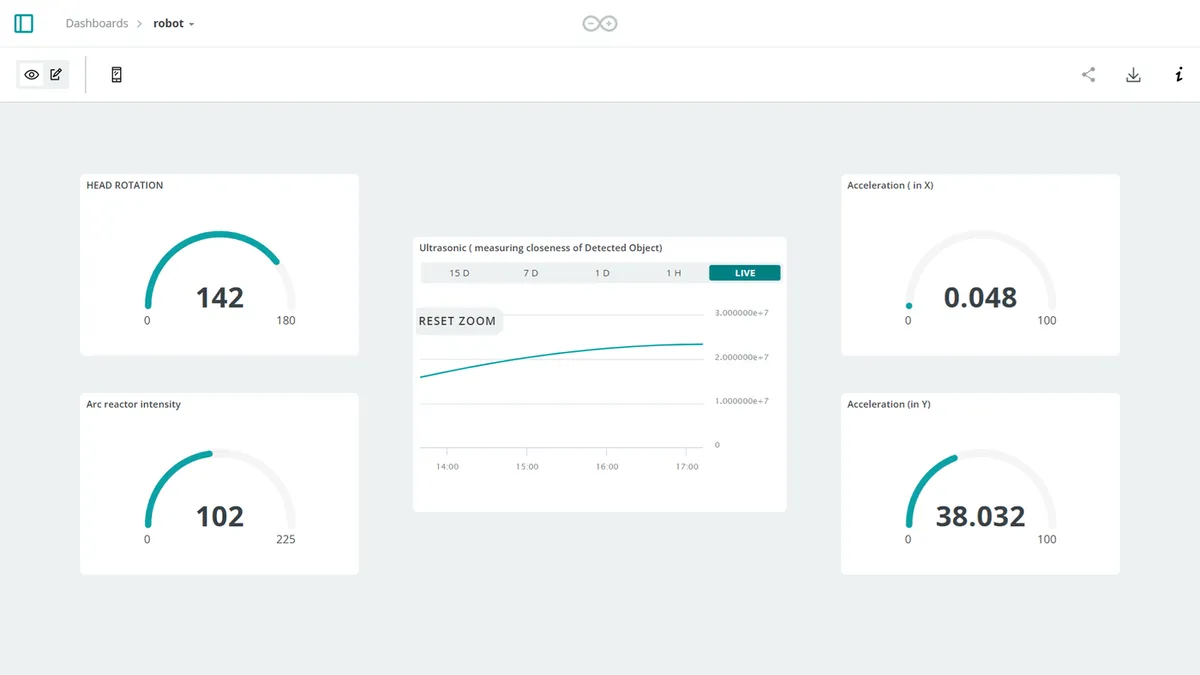
Arm movements (up, down, front), simple dance routines, waving “hi”, and turning the head toward detected objects, with live data on Arduino Cloud.
Challenges and fixes
- Servo range: the MG995 servos are limited to 0–180°. I fine-tuned positions in Tim’s Servo x16 Controller and made preset poses.
- Power: 9 V batteries could not give enough current. I moved to the 18650 pack.
- Weight: 3 mm plywood made the robot heavy. A next version needs a lighter material.
- Assembly: I mounted some servos before testing them, which limited some motions. Now I test every part before final assembly.
- Soldering: bad joints on the PCA9685 pins caused connection faults. I re-soldered them with a 30 W iron.
Next versions
- V2: web-based control interface; smoother and wider movements.
- V3: ESP32-CAM for image detection; copy human movements in real time.
- V4: voice control and natural-language interaction through an AI API.